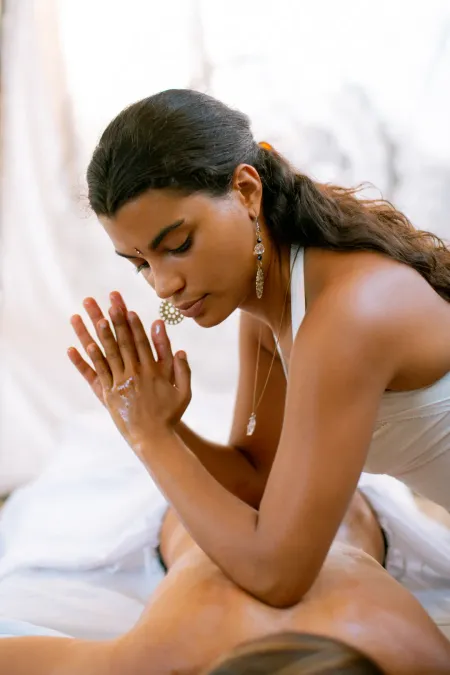


Ayurveda

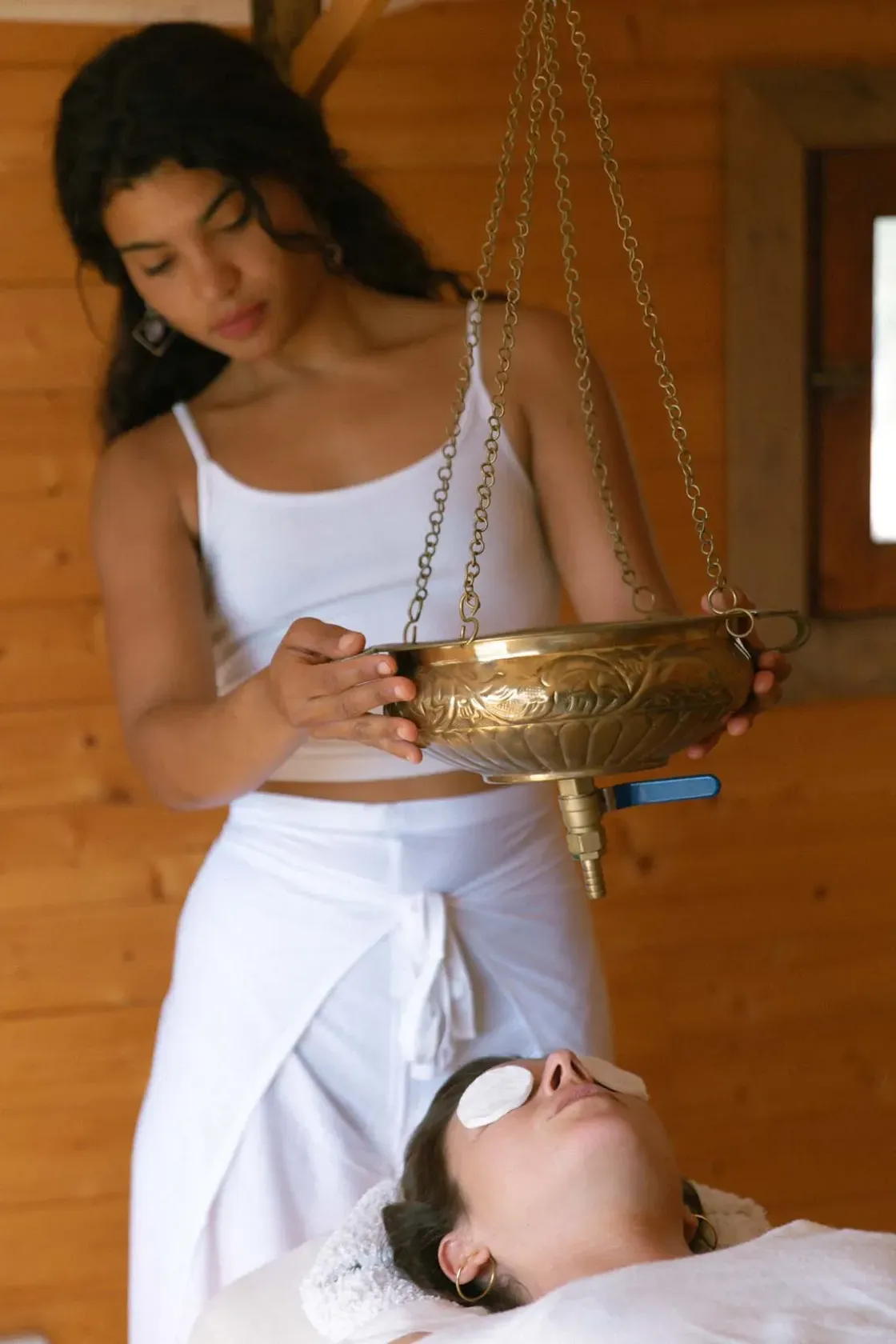
Ayurveda
Ayurveda, the science of life, is one of the oldest health systems in the world. It arises from a profound observation: the human being is a reflection of nature, and their wellbeing depends on living in coherence with it.
For thousands of years, sages and physicians studied the rhythms of the body in the same way they studied the cycles of the sun, the seasons, and the elements. From this perspective emerged one of the most complete systems of health and prevention, even to this day.
Health as a state of inner balance
Ayurveda describes that each person possesses a unique constitution — a singular combination of Vata, Pitta, and Kapha — that determines how we digest, how we think and feel, and how we respond to the world.
When this constitution is altered by stress, inadequate habits, or rhythms that go against our nature, the body begins to speak through symptoms. From this perspective, health is the result of dynamic balance between the three doshas that regulate all the physiological functions of the body: mobility, metabolism, tissues, immunity and general stability of the organism.
But its depth goes beyond physiology. Ayurveda considers that life is animated by an inherent intelligence, Prana, which sustains all organic and mental processes.
The mind, emotions, and energy are understood as part of the same fabric that directly influences physical health.
Ayurveda does not understand health as a static state, but as constant movement. It does not limit itself to treating symptoms: it teaches self-knowledge, listening to subtle signals, and living in relationship with what sustains us: the environment, breath, food, and rest.
Healing tools
Its tools are simple yet profound:
- Nutrition: conceived as daily medicine.
- Routines (Dinacharya): that organize the nervous system.
- Herbal Medicine: plants that restore tissues and functions.
- Massage: that releases the body’s memory.
- Purification: processes to cleanse what has accumulated over time.
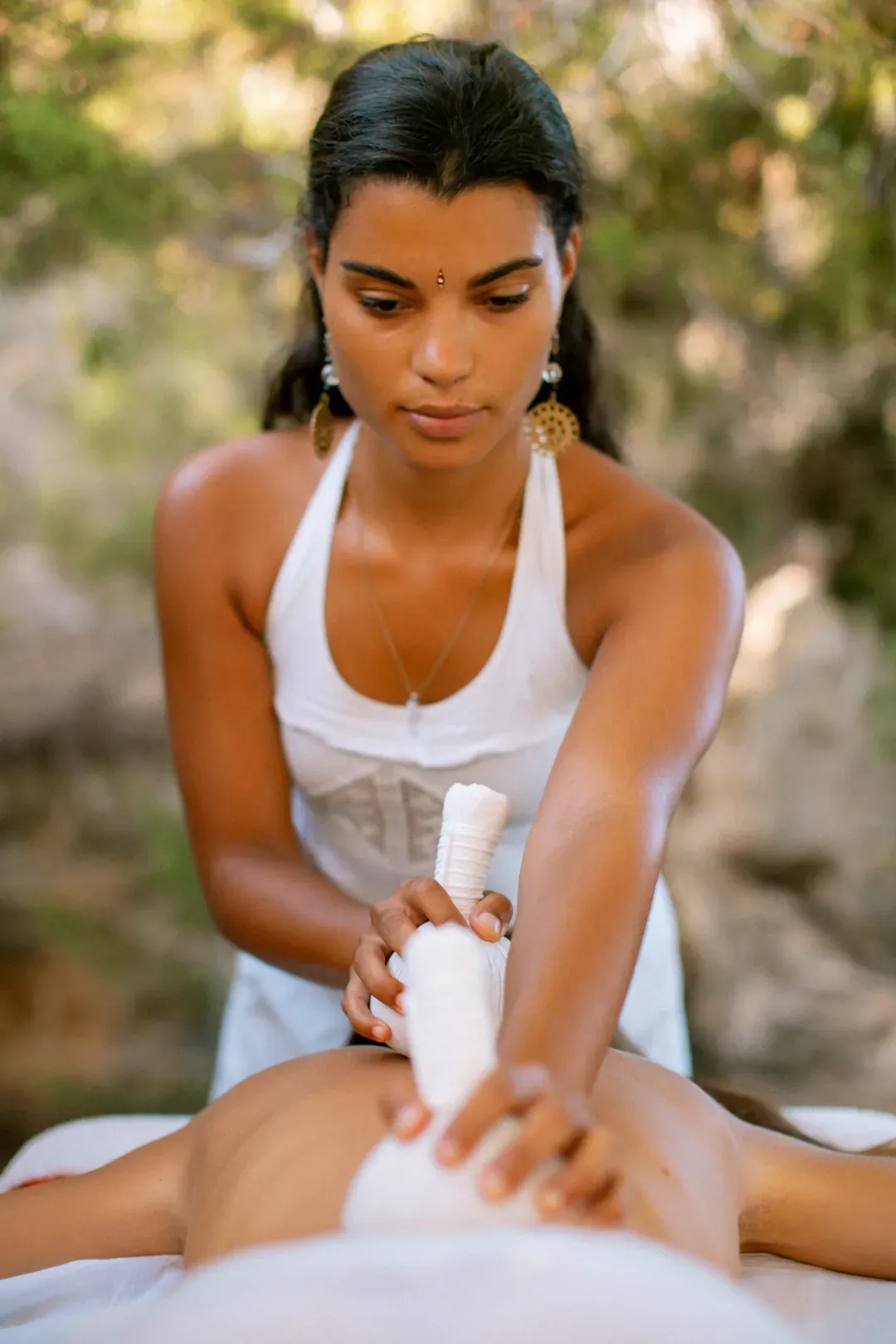
The Doshas
🌿 Vata Dosha
Vata is formed by the elements air and ether and represents movement, change and communication. Its main qualities are lightness, dryness, coldness, mobility and irregularity.
People with a predominant Vata constitution tend to have slim or tall bodies, softer muscles and lower endurance. They are often sensitive to cold and wind, with dry skin and cold hands and feet. Vata types are naturally active, restless and drawn to movement, travel and stimulation.
Emotionally, Vata expresses creativity, enthusiasm and adaptability. When balanced, it brings joy and inspiration; when imbalanced, it may manifest as anxiety, insecurity, fear, nervous tension or sleep disturbances.
Balancing Vata requires warmth, grounding, regularity and rest, helping the nervous system settle while supporting its dynamic nature.
🌿 Pitta Dosha
Pitta Pitta arises from the elements fire and water and governs transformation, digestion and metabolism. Its qualities are heat, intensity, sharpness, lightness and fluidity.
People with a predominant Pitta constitution usually have a medium, well-defined build, good muscle tone and strong digestion. They tend to feel warm, have a sharp appetite and a strong capacity for focus and leadership. Heat, excess stimulation or overwork can easily disturb Pitta.
On an emotional level, Pitta expresses clarity, determination and intelligence. When balanced, it brings confidence and purpose; when imbalanced, it may appear as irritability, impatience, anger, inflammation or burnout.
Balancing Pitta involves cooling, moderation and relaxation, supporting the body and mind to release excess heat and intensity.
🌿 Kapha Dosha
Kapha is formed by the elements earth and water and provides structure, stability and endurance. Its qualities include heaviness, slowness, moisture, coldness and steadiness.
People with a predominant Kapha constitution often have strong, well-built bodies, good vitality and natural resistance. They tend to gain weight easily and move more slowly, preferring calm, rest and routine. Mornings can feel heavy, especially after sleep or meals.
Emotionally, Kapha expresses patience, care and affection. Kapha types are stable, grounded and reliable, with a strong connection to the earth. When imbalanced, Kapha may manifest as apathy, sadness, attachment, congestion or a sense of stagnation.
Balancing Kapha calls for movement, lightness and stimulation, while preserving its natural qualities of support and stability.

In an accelerated world, Ayurveda offers a path of return: a more human rhythm, more in sync with nature. It is a practice and, above all, a path toward living life with more fullness.
He who lives in harmony with nature preserves life.
Ashtanga Hridayam
More Offerings

Wellbeing Programs & Retreats in Ibiza
Discover our carefully curated wellbeing experiences in Ibiza and our upcoming retreats

Integrative Body Therapy
A therapeutic approach that works through the body to access emotions, somatic memory, and unconscious patterns.
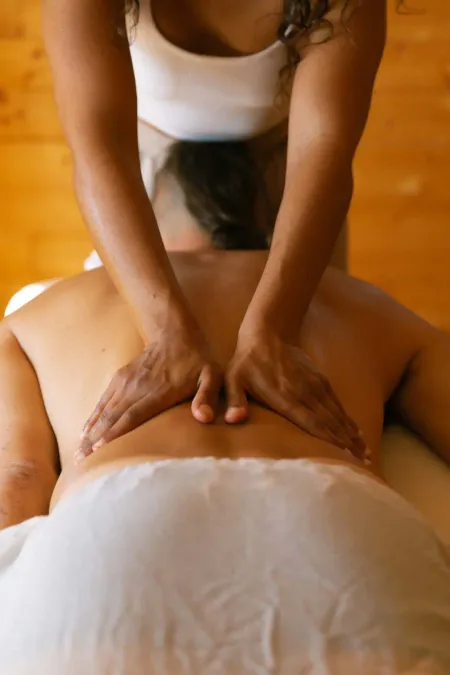
Massage in Ibiza
The art of touch is one of the oldest healing methods. Collecting different techniques from across the world, I combine and adapt them to your personal needs.

Osteopathy
Holistic manual therapy that understands the body as an interconnected system, where structure and function are deeply linked.

Panchakarma in Ibiza
Experience Ayurveda's deepest detoxification and rejuvenation process in the healing nature of Ibiza.
Valeska is an incredible healer: wise, compassionate, and deeply intuitive. A session with her is a complete experience, from the beautiful aesthetic of her space to the profound knowledge she shares. Her touch is truly unique, backed by extensive expertise. I highly recommend her to anyone seeking genuine healing.
Erel
Ready to start?
Contact me for more information or to guide you towards the service or process that best suits your needs.